Oklahoma Zone 7b Vegetable Gardening Calendar for Beginners
A Zone 7b label can make Oklahoma planting seem more predictable than it is. It describes a kind of winter cold, not the exact week your garden is ready for seeds or transplants. This calendar helps beginners choose crops by season, watch local conditions, and adjust their plans when weather or garden conditions do not match expectations.
What a Zone 7b calendar can and cannot tell you
A hardiness zone is useful background when choosing plants that must survive winter, but it is not a complete schedule for vegetables. Vegetable planting depends on the crop, the conditions in the garden, and the weather around planting time. A neighborhood garden, a sheltered bed beside a building, and an exposed plot may not warm or dry at the same pace.
That distinction matters if you are using a Zone 7b calendar as your starting point. Treat the label as a broad planning cue, not a promise that a certain day is safe for every crop. For more on the difference, see What USDA Hardiness Zones Can and Cannot Tell Vegetable Growers.
Start with the crop’s season
A beginner-friendly calendar begins with two broad crop groups: cool-season and warm-season vegetables. According to Oklahoma State University Extension, cool-season crops grow best at average daily temperatures of 70 F or less. These crops generally suit the cooler parts of the growing year, when heat is less likely to interfere with growth.
According to Oklahoma State University Extension, warm-season crops grow best at average daily temperatures ranging from 70 F to 90 F. These crops are suited to warmer conditions, but a warm afternoon alone does not necessarily mean the whole garden is ready. Check how the soil and weather are behaving, and pay attention to the crop’s needs.
The groups give you a way to organize decisions without pretending every vegetable follows the same schedule. A crop can be planted too early for its preferred conditions, or too late to make good use of the season ahead. A calendar is most helpful when it helps you ask the right question: does this crop fit the conditions I have now, and are those conditions likely to continue?
Use the calendar as a window, not a deadline
Printed calendars and online schedules are useful for narrowing down when to pay attention. They cannot account for every cold snap, wet stretch, exposed site, or unusually warm spell. A planting window is a period when conditions may be suitable; it is not a guarantee that a seed will germinate well or a transplant will settle in.
If a calendar suggests a crop is approaching its planting window but the bed is still cold, soggy, or hard to work, waiting may be the better choice. If the weather shifts suddenly, reassess rather than following a date just because it is printed. For regional context, Oklahoma Planting Dates: Why Southeast and Northwest Differ and Adapting General Planting Calendars to Oklahoma Weather explain why a single statewide schedule can be a rough fit for some gardens.
Beginners can reduce confusion by keeping a simple record of what they sowed, where it went, and what the garden conditions were like. A few notes about whether seeds emerged, transplants recovered, or a bed stayed wet can be more useful next season than trying to remember every detail.
Plan the garden in seasonal waves
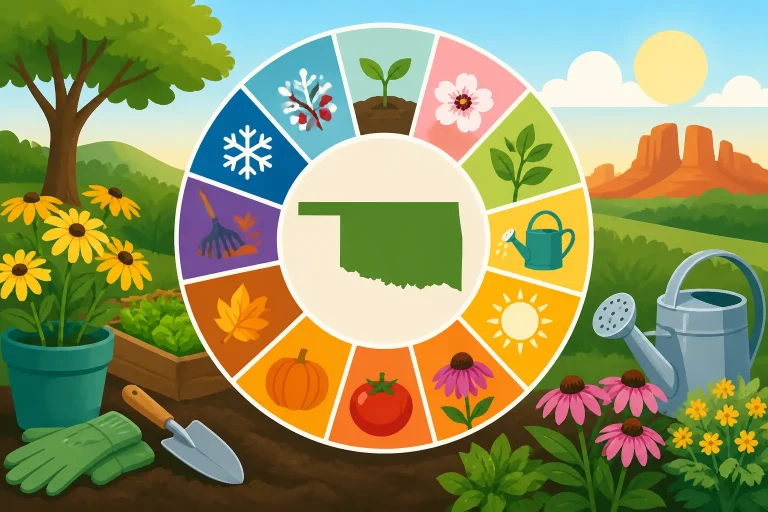
It is tempting to plant the whole garden at once, especially when a fresh calendar makes the season look neatly organized. A more flexible plan divides planting into waves. Cool-season crops take advantage of cooler conditions; warm-season crops wait for a better fit; and, later, another round of cool-season planting may be possible if conditions allow.
This approach helps beginners avoid two common problems: putting tender crops outside before the garden is ready, and treating the end of the spring planting period as the end of the gardening year. The exact opportunity depends on the crop and local weather, so use a calendar to plan ahead and then make the final call from the garden.
The cooler part of the growing year
Cool-season crops are generally the starting point when temperatures suit them. Think about what you want to eat, how much space you have, and whether the crop can be sown directly in the bed or is easier to start elsewhere. Make room for access to water and for harvesting, rather than filling every open patch with seeds.
The challenge for beginners is often not identifying a cool-season crop but keeping the planting aligned with changing conditions. A bed that is too wet or difficult to work can delay sowing. A warming stretch may also change how long a crop remains comfortable. Check the crop’s seed packet and a locally relevant calendar, then pay attention to the actual weather. The Oklahoma Cool-Season Vegetables: Early Spring Sowing Guidelines can help you think through this part of the season.
The warmer part of the growing year
Warm-season crops need a different decision process. Rather than planting them just because the calendar has moved into spring, wait until the conditions are appropriate for the crop. A sheltered, sunny bed may behave differently from a low or exposed site, so inspect the spot you will actually use.
Transplants can make sense for crops that are commonly started ahead of planting outdoors, while direct sowing is suitable for others. The best method depends on the crop, your space, and your willingness to care for young plants. If you are unsure which method to use, Starting vs Transplanting Vegetables on the Oklahoma Calendar offers a way to compare the choices.
Avoid assuming that all warm-season crops should go into the ground together. They may differ in how they establish and how much room they need. Read the instructions for each crop, group plants with similar needs, and leave enough space to move through the bed and harvest without damaging neighboring plants.
A later planting opportunity
Some gardeners plan another round of crops after the main warm-season planting. This can make a garden more productive, but it requires planning backward from the conditions the crop needs and the time it takes to mature. Check the seed packet for maturity information and compare it with a locally relevant fall schedule.
Do not assume every spring crop can simply be repeated later. Heat can make establishment difficult, and a crop that grows well in cool conditions may need a different approach when sown during a hot spell. Starting seeds in a cooler, protected spot and moving them later may be an option for some crops, but follow crop-specific guidance. Planning Fall Gardens Across Oklahoma: Dates, Frost, and Crops and Oklahoma Fall Garden Calendar: Sowing Greens and Roots on Time can help with this planning.
Choose sowing methods and prepare beds thoughtfully
A calendar says when to consider planting; the seed packet and the garden tell you how to do it. Before sowing, decide whether the crop should be direct-seeded in the bed or started as a transplant. Then prepare a space where seeds or young plants can establish without being crowded, buried too deeply, or left in standing water.
Direct sowing or transplanting
Direct sowing means placing seed in the bed where the crop will grow. It avoids the extra step of moving a plant, but the seedbed needs to stay suitable for germination. Young seedlings may also need protection from drying conditions, heavy rain, or disturbances.
Transplanting lets a plant begin growing in a protected setting before it goes into the garden. It can be useful when a crop benefits from an early start, but a transplant needs time to adjust after it is moved. Handle seedlings carefully, and follow the seed or plant instructions for spacing and planting depth. Do not assume that a larger transplant is always better; a stressed or poorly conditioned plant can struggle even when it looks substantial.
If you are buying starts, choose healthy-looking plants and avoid keeping them in small containers longer than necessary. If you are raising your own, give them enough light and water without leaving them constantly saturated. Before moving them outdoors, use a gradual transition so they can adjust to outdoor conditions. The article Hardening Off Spring Vegetable Transplants in Oklahoma explains why that adjustment matters.
Give every crop a suitable place
Look at the bed before you plant. Does it receive enough light for the crop? Does water drain away, or does the soil remain saturated after rain? Can you reach plants for weeding and harvesting? These practical checks matter more than filling every available inch.
Oklahoma gardens can have difficult soils, including dense or slow-draining areas. If a bed is hard to work or water collects there, solve that problem before committing to a full planting. Adding organic matter or choosing a better-drained location may help, but avoid making major soil changes without understanding the existing soil. Starting a Garden in Oklahoma Clay: Site Prep and Organic Matter and Evaluating Oklahoma Garden Soil and Drainage Before Sowing offer useful background.
For a first garden, keep the layout simple. Group crops by season, leave paths or stepping areas, and make it easy to see what is growing. Crowded beds are harder to water evenly, inspect, and harvest. A manageable planting that you can care for is more useful than a large one that becomes difficult to maintain.
Read seed packets before opening them
A seed packet is not just a description of the crop. It usually includes practical details such as sowing depth, spacing, preferred planting method, and expected maturity information. Follow those directions for the particular seed you have, rather than assuming all varieties of a crop behave identically.
Maturity information is especially useful when planning a later crop. It helps you judge whether the planting has a reasonable chance to reach harvest before conditions change. It is an estimate, not a guarantee: weather, soil, water, and plant health all affect the pace of growth. For help interpreting that information, see Days to Harvest: Estimating Maturity for Garden Crops.
Keep the packets or write down the information you need before sowing. Mark the row or planting area so you can tell seedlings from weeds as they emerge. If you sow multiple crops close together, clear labels can prevent an avoidable mix-up.
Adjust planting decisions to real garden conditions
A calendar is a planning tool, but the garden is the test. Before planting, look at the forecast, the soil, and the crop. If the conditions are unsettled, consider waiting or protecting a small planting rather than committing the whole bed. Small, reversible decisions are helpful for beginners because they limit the impact of a poor-timed sowing.
Pay attention to cold and warm spells
A warm day does not prove that a stretch of suitable weather has arrived, just as a chilly night does not always mean a crop must be abandoned. Check the forecast over the coming period and consider how exposed the bed is. Low spots, open areas, and sheltered corners can experience different conditions.
For tender young plants, sudden cold can be a setback. Covers may provide temporary protection, but they need to be used thoughtfully and removed or adjusted when conditions change. A cover should not be treated as a substitute for choosing a suitable planting window. For practical approaches, see Protecting Young Oklahoma Garden Plants From Spring Cold and How to Read a Local Freeze Warning for Your Backyard.
Heat also affects planting decisions. Young seedlings can dry quickly, and some crops become less successful when temperatures rise beyond their preferred conditions. If conditions are hot, consider whether you can provide appropriate care and whether a different planting window would be more reliable. Watering Oklahoma Vegetable Crops During Summer Heat Waves discusses how to think about water during demanding weather.
Check the soil, not just the air
Air temperature is easy to notice, but soil condition affects seeds and roots directly. A bed that is waterlogged, crusted, or very dry may not be ready for sowing even when the day feels pleasant. Check the bed by touch and observation: can you work it without compacting it, and does it hold moisture without staying saturated?
For warm-season crops, soil temperature can be another helpful indicator. Use a suitable soil thermometer if you have one and consult crop-specific guidance about the conditions each crop needs. Avoid turning this into a single measurement rule for every vegetable: different crops respond differently, and moisture and weather still matter. Testing Soil Temperature Before Sowing Spring Crops in Oklahoma provides additional context for this decision.
Water consistently, but avoid guesswork
Seeds and young plants need water to establish, but frequent surface sprinkling is not always the best solution. The right approach depends on the crop, the soil, the weather, and the stage of growth. Check whether the root area is moist rather than relying only on the appearance of the soil surface.
Clay can stay wet longer than a light, well-drained bed, while an exposed or raised bed may dry more quickly. Rainfall also does not always reach every part of the garden evenly. Check the bed itself after rain and adjust your watering based on what the soil is doing. If water runs off or pools, slow down and address drainage rather than simply adding more.
Mulch can help limit moisture loss and reduce weeds, but it should not be piled against young stems or used to hide a bed that needs attention. Keep seedlings visible and check beneath the mulch before watering. Watering Young Transplants vs Deep Watering Established Crops can help you distinguish the needs of new plantings from those of established plants.
Build a beginner calendar that you can revise
A useful personal calendar does not need to predict every change in the weather. Its purpose is to help you organize planting, notice patterns, and make better decisions next time. Start with a short crop list that suits your meals, available space, and willingness to maintain the garden.
For each crop, record:
- Whether you direct-sowed it or planted a transplant.
- The bed or container where it went.
- The weather and soil conditions at planting.
- Whether seedlings emerged or transplants settled in.
- When you began harvesting and what affected the crop.
You do not need to keep an elaborate journal. A notebook, calendar, or simple garden map is enough if you use it consistently. Include the crop name and the source of the planting advice you followed. If a planting failed, note what happened rather than labeling the whole crop a failure. Seeds may not have emerged because the bed dried, stayed wet, or was disturbed; a transplant may have suffered from stress or a sudden change in weather.
Make the schedule fit your household
Beginners often sow more than they can use or care for. Choose a modest amount of each crop, and leave space for plants to grow to their expected size. If you have limited space, prioritize crops you enjoy and can maintain. Containers can help where a garden bed is unavailable, but they may need closer attention to water because their growing medium can dry out more quickly.
Succession planting—sowing a crop in separate rounds rather than all at once—can spread harvests over time. It works best when the crop and season suit repeat sowing, and when you have enough space and time to care for each round. If you are interested in that approach, Succession Planting in Oklahoma Gardens: Spacing Repeat Sowings can help you plan it.
Be realistic about harvest and maintenance. A garden that fits your schedule is more likely to stay productive than one designed around an idealized calendar. If a week is busy, choose crops and planting methods you can manage rather than adding more tasks.
Review the plan as the season changes
A seasonal calendar is not finished once seeds are in the soil. Recheck it when weather shifts, when a crop finishes, or when you decide to make room for another planting. Remove plants that are no longer productive if they are taking space from a more suitable crop, but do not rush to clear a bed just because a calendar says the season is changing.
Compare what happened with what you expected. Did seeds emerge reliably? Did the bed stay too wet? Did transplants need more adjustment before planting out? Did the crop mature in time for your plans? These observations help you adapt a broad Zone 7b schedule to your own site without treating one difficult season as a permanent rule.
For a wider overview of garden tasks and seasonal choices, use Oklahoma Vegetable Planting Calendar: Full Growing Season Guide alongside a more local calendar. Month-by-Month Oklahoma Gardening Calendar: Planting and Chores can also help you keep planting decisions connected to ongoing garden work.
Frequently Asked Questions
Does Zone 7b tell me exactly when to plant vegetables?
No. It is a broad reference, not a date-by-date vegetable schedule. Use crop requirements, local weather, and the condition of your soil to decide when to plant.
Should I plant every vegetable as soon as the calendar recommends it?
No. A calendar helps identify a possible planting window, but the bed and weather may not be ready. Check crop-specific directions and reassess conditions before planting.
What should I plant first as a beginner?
Start with a small selection of crops you enjoy eating and can care for. Choose crops that fit the current conditions, and use their seed packets to confirm planting method, depth, and spacing.
Can I make another planting later in the year?
Possibly. Match the crop to the conditions expected during its growth and check whether it has time to mature. A fall calendar can help you evaluate the opportunity, but local weather and the crop’s requirements still matter.
Sources
- Oklahoma State University Extension (checked November 15, 2026)
Disclaimer
This article is for general informational purposes only and does not constitute professional advice. Laws, prices and regulations vary by location and change over time. Consult a qualified professional for guidance on your specific situation. Oklahoma Gardening Guide is not a government agency and is not affiliated with any university extension, state department of agriculture or other government agency.