What to Plant Now in Oklahoma: Seasonal Garden Calendar
Deciding what to plant in Oklahoma can feel like a moving target: a warm spell may give way to a cold snap, and conditions can differ across the state. The most useful calendar is one that responds to your current weather, soil, and garden space. This guide explains how to choose crops by season, what to prepare before sowing, and how to adjust when the weather does not follow the calendar.
How to Decide What to Plant Now
A calendar can help you plan, but a date alone cannot tell you whether your garden is ready. Oklahoma weather shifts, and conditions in one part of the state may not match conditions elsewhere. Before planting, consider the crop’s preferred growing conditions, your local forecast, the state of the soil, and the time the plant will have to mature.
Oklahoma State University Extension says cool-season crops grow best at average daily temperatures of 70 F or less. Oklahoma State University Extension says warm-season crops grow best at average daily temperatures ranging from 70 F to 90 F. These are useful ways to think about crop groups, not a promise that a particular afternoon’s temperature tells the whole story. A brief warm spell does not necessarily signal that a warm-season crop is ready to go outside, and a chilly night does not necessarily mean every cool-season crop must be removed.
Think in terms of a growing window rather than a planting day. A crop needs conditions it can tolerate after planting, enough time to establish, and a reasonable chance to mature before the weather becomes unfavorable. When you are choosing what to sow or transplant, ask:
- Is this crop suited to the temperatures expected during its early growth?
- Is the garden soil workable, rather than waterlogged or packed?
- Is a cold snap, heat wave, or dry spell in the forecast?
- Will this crop have enough suitable weather to grow and produce?
- Can you protect or water it if conditions turn difficult?
The seed packet provides crop-specific information about sowing depth, spacing, and expected maturity. Use those details alongside the weather and advice for your area. For a broader overview of how seasonal windows fit together, see Oklahoma Vegetable Planting Calendar: Full Growing Season Guide and Adapting General Planting Calendars to Oklahoma Weather.
Check the actual garden, not only the forecast
A forecast is useful, but your yard may have its own conditions. Beds beside a sunny wall can warm sooner than open ground. Low spots can stay wet or collect cold air. Exposed areas may dry quickly or take the brunt of strong winds. A sheltered bed, a raised bed, and an in-ground plot can each be ready at different times, even when they are close together.
Walk through the planting area before working it. If soil is wet enough to smear, stick to tools, or form dense clumps, digging and raking can damage its structure. Wait until it is workable. If the surface is dry but the soil below is still damp, consider whether seeds will have consistent moisture for germination. A bed that looks ready from above may still need preparation.
Keep track of what happens in your own garden. Note which beds warm or dry first, where frost tends to linger, and which areas get harsh afternoon sun. Those observations will make future calendar decisions more useful than a broad date range.
Choose between sowing and transplanting
Direct sowing puts seed into its final growing place. It works well for crops that do not benefit from being moved or that are simple to establish outdoors when conditions suit them. Transplanting gives a plant a head start in a protected setting, but moving it can cause stress. A transplant may need time to adjust before it resumes growth.
Neither method is automatically better. Follow crop-specific directions and consider the condition of the seedling, the garden, and the weather. A vigorous transplant set out into unsuitable conditions can struggle, while a seed sown into cold, crusted, or dry soil may fail to establish. For help weighing these approaches, read When to Direct Sow vs Transplant Vegetables on the Oklahoma Calendar.
A Seasonal Calendar for Oklahoma Gardens
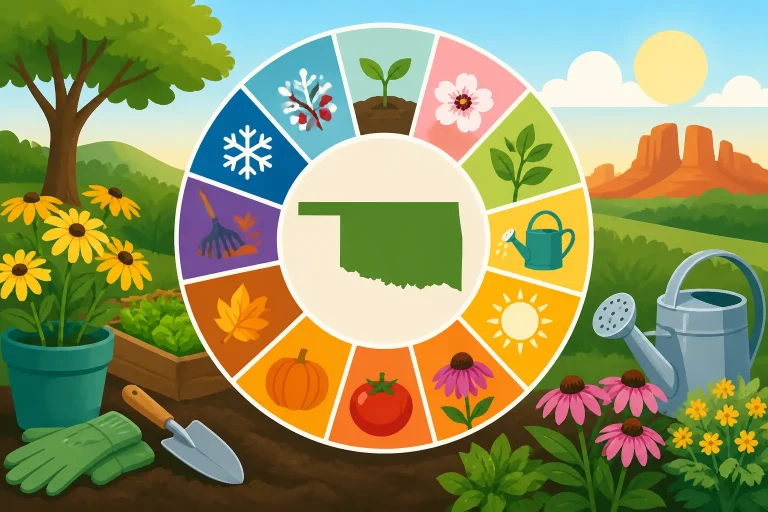
The broad rhythm of an Oklahoma garden moves from cool-weather crops toward warm-weather crops, then back toward crops that can grow as temperatures ease. The timing is not identical everywhere, and the transition between seasons is rarely a clean boundary. Use this overview to decide what to consider, then check crop-specific guidance and local conditions before planting.
| Garden period | What to consider | What to check before planting |
|---|---|---|
| Late winter and early spring | Crops suited to cool conditions, plus bed preparation | Soil workability, forecast changes, and crop-specific sowing guidance |
| Spring transition | Cool-season crops that still fit conditions; preparations for warm-season crops | Whether temperatures are holding, whether the soil is ready, and whether cold risk remains |
| Summer | Heat-tolerant crops, continued care for established plants, and possible later sowings | Heat, moisture, shade, and the time needed for a crop to mature |
| Late summer into fall | A new round of crops that can establish as weather moderates | Crop maturity information, local conditions, and the approach of colder weather |
| Cold-season stretch | Harvesting, bed care, and protected growing where appropriate | Crop hardiness, protection needs, and the forecast |
This table is a planning framework, not a statewide schedule. A gardener in a warmer location may reach a seasonal transition before a gardener in a cooler or more exposed one. Even within a yard, a sheltered bed may be ready before an open plot. For regional timing, compare the advice in Oklahoma Planting Dates: Why Southeast and Northwest Differ and How Regional Climate Shifts Oklahoma Vegetable Sowing Schedules.
Late winter and early spring
As the garden wakes up, begin with observation and preparation rather than trying to fill every bed immediately. Check whether the soil is ready to work, clear away plant debris where appropriate, repair supports, and plan where crops will go. If the ground is still wet or the forecast remains unsettled, waiting can be more productive than forcing an early planting.
Cool-weather crops are often the first group to consider. Use crop-specific guidance to decide which ones can be sown directly and which are more appropriate as transplants. If seedlings are being raised indoors, plan for a gradual transition outdoors. Sudden exposure to wind, direct sun, or a sharp change in temperature can be hard on plants that have been growing in a sheltered space. Hardening Off Spring Starts: Conditioning Seedlings in Oklahoma covers that transition.
The spring transition
Spring is a period of overlap. Some cool-season crops may still be productive while gardeners prepare for warm-season planting. A brief run of warm days can create pressure to plant tender crops, but conditions can turn again. Look beyond the warmth of a single afternoon and consider the forecast, the condition of the soil, and the needs of the crop.
Use this transition to prepare beds, set up supports, and make sure watering equipment is ready. These tasks reduce the rush when warm-season crops do become suitable for your garden. For crop-specific guidance on tomatoes, When to Plant Tomatoes in Oklahoma for Spring Harvest is a useful companion.
Summer
Summer asks for a different kind of planning. Some crops cope better with heat than others, but even suitable plants can struggle if they are short of moisture, exposed to harsh sun, or competing with weeds. Existing crops may need consistent attention, while new sowings should be chosen with their remaining growing window in mind.
Do not assume that an empty patch should be planted immediately. Consider how hot and dry the bed is, whether seeds can be kept evenly moist, and whether the crop can establish in the conditions ahead. If a later crop is the goal, use maturity information on the seed packet and local guidance rather than guessing. Planning a Late-Summer Garden: Second-Season Vegetables in Oklahoma explains how to think through that transition.
Late summer and fall
A fall garden is planned backward from the weather expected later, not just forward from the day you sow. Seeds need time to germinate and plants need time to grow, even as the days become less favorable. In summer heat, seeds may need extra attention to stay moist and seedlings may benefit from relief from intense sun.
Start with crops suited to cooler conditions and use crop-specific maturity information to judge whether a sowing is practical. A planting that is too late may produce small plants or little harvest before conditions become too cold. See Planning Fall Gardens Across Oklahoma: Dates, Frost, and Crops and Calculating Fall Crop Maturity Before Oklahoma Winter Freezes for more help planning this window.
Cool-Season Crops: Use the Cooler Growing Window
Cool-season crops are a natural place to start when the weather favors them. The group includes vegetables grown for leaves, roots, stems, and immature flower heads. Which crops make sense at a given moment depends on current conditions, how quickly the soil is changing, and the crop’s own requirements.
A broad category is not a substitute for crop-specific instructions. Different vegetables germinate and grow at different rates, and they do not all respond the same way to warmth, cold, or a sudden change in moisture. Read the seed packet and local recommendations before deciding whether to sow directly, transplant, or wait.
Direct sowing and transplanting
Some cool-season crops are commonly established by direct sowing. Prepare a fine, reasonably even seedbed, follow the packet for depth and spacing, and keep the surface from drying out while seeds germinate. Seed placed too deeply or allowed to dry repeatedly may emerge unevenly. Crowded seedlings may need thinning according to crop guidance so that the remaining plants have room to develop.
Other cool-season vegetables are often started as transplants or purchased as starts. Before planting them out, check that the seedlings are sturdy and not severely stressed. Set them into prepared soil, water them in, and pay attention to weather during their adjustment. If conditions are unsettled, temporary protection may help, but it is not a substitute for choosing a suitable planting window. See Spring Planting Calendar for Oklahoma Cabbage and Leaf Greens for a crop-focused example.
Keep the seedbed consistently prepared
The soil surface can dry faster than the deeper bed, particularly in exposed areas. A newly sown row needs enough moisture for seeds to germinate and young roots to develop. Check the bed rather than relying only on rainfall or a sprinkler schedule. If water runs off, pools, or leaves a hard crust, adjust how you water and assess the bed’s structure.
Weeds compete with seedlings for space and resources. Remove them while small and distinguish them from the crop before pulling. It is easier to manage weeds when the crop row is visible and the plants are still young. Avoid disturbing shallow-rooted seedlings while working nearby.
If a cold spell follows sowing, do not assume the planting has failed immediately. Germination and growth may slow, and emergence may be uneven. Give the bed time, check for actual seedlings, and avoid resowing until you have a reason to believe the original seed did not establish. Conversely, if a bed has been too warm or dry for a crop, repeated watering cannot correct an unsuitable seasonal choice.
Harvest and succession planning
Cool-season crops can change quickly when the weather warms. Leaves may become tougher, plants may produce flower stalks, or roots may stop developing as expected. Harvest regularly according to the crop’s signs of readiness, and do not wait for every plant to reach the same size if the crop can be picked in stages.
If you want a steady supply, plan repeat sowings where crop guidance supports it. Leave room for later plantings rather than sowing the whole bed at once. This spreads the harvest and reduces the chance that all plants mature during the same short period. Succession Planting in Oklahoma Gardens: Spacing Repeat Sowings offers more detail on planning repeat crops.
Warm-Season Crops: Wait for Conditions to Hold
Warm-season crops need favorable growing conditions to establish and grow well. Tomatoes, beans, cucumbers, peppers, eggplant, squash, corn, and okra are familiar examples, but each has its own needs. Some are more sensitive to cool conditions than others, so do not use one crop as a signal that the entire warm-season garden is ready.
The main challenge is avoiding the false start. A stretch of sunny days can make a bed feel ready, but soil may still be cool or weather may change. Young transplants can be set back by a sudden cold spell, while seeds may sit without germinating if conditions are unsuitable. Consult the crop-specific planting advice and consider the pattern of conditions rather than reacting to a single warm day. Best Temperature Windows for Setting Out Warm-Season Oklahoma Crops and Safe Vegetable Planting Dates Across Oklahoma Regions provide more focused timing guidance.
Prepare the bed before transplanting
Before setting out a warm-season crop, clear the planting area, loosen only soil that is ready to work, and make sure water can reach the root zone. Add supports or identify where they will go before plants become large. A trellis, cage, or row support is easier to install while the bed is accessible than after stems and roots have spread.
Space plants according to the seed packet or crop guidance. Crowding can limit airflow and make it harder to inspect or harvest plants. Wider spacing may make more sense where plants grow vigorously or where airflow is limited, but use recommendations for the particular crop rather than improvising a universal distance.
For transplants, water the root area and handle plants carefully. Avoid placing a root-bound or wilted start into a dry bed and expecting it to recover without attention. Give new plants time to establish, monitor soil moisture, and protect them if the forecast creates a risk. Protecting Young Oklahoma Garden Plants From Spring Cold discusses ways to think about vulnerable starts.
Sow or transplant at the crop’s pace
Warm-season vegetables vary in how they are established. Some gardeners sow them directly; others use transplants to get a head start. Your choice should reflect the crop, the season, and the condition of the planting material.
Seedlings raised indoors need gradual exposure before they are moved permanently outdoors. Starts bought from a nursery may also have been grown under conditions different from your garden. Give them time to adjust and avoid leaving them exposed to strong sun and wind before they are ready. For details on moving plants from a protected setting, see Hardening Off Spring Vegetable Transplants in Oklahoma Backyards.
When sowing outdoors, follow the packet for depth and spacing. Keep the seed zone moist while germination is underway, but do not leave the soil waterlogged. If a row fails to emerge, investigate before sowing again: check whether the soil crusted, dried out, washed away, or was disturbed. That diagnosis can prevent the same problem in a replacement sowing.
Keep expectations flexible
Planting at the right time improves the chance of establishment, but it cannot guarantee a particular harvest. Weather, soil conditions, pests, disease, and plant health all affect the result. Build flexibility into the plan. If a crop is delayed, you may be able to shift to a faster crop or use the space for a later planting. If a transplant is struggling, check water, exposure, and soil contact before deciding that it is beyond recovery.
Summer Planting, Heat, and Midseason Care
When summer arrives, gardening becomes a balance between keeping established crops productive and deciding whether another sowing has enough time to develop. Heat affects germination, transplant establishment, flowering, and fruit set differently across crops. A plant that tolerates hot weather may still struggle in a dry bed or a location with intense reflected heat.
Start by assessing the conditions in the bed. Is the surface drying quickly? Does water soak in or run away? Is the planting area exposed to afternoon sun, or does it receive some relief? Are seedlings surrounded by hot paving or walls? These details can determine whether a sowing is practical and what care it will need.
Protect new sowings from drying out
Seeds and young seedlings are especially vulnerable to uneven moisture. The surface can dry while the root zone remains damp, or a brief shower can wet the top without providing lasting moisture. Check the soil directly and use a gentle watering method that does not wash seed away.
If conditions are very hot, consider whether the crop is suited to being started then. Some later-season crops may be planned for a new planting window, but sowing into extreme conditions without a way to manage moisture can lead to poor emergence. Choose a location and method that fit the plant. Temporary shade may help sensitive seedlings, but it should not become a reason to ignore the crop’s seasonal needs.
Care for established crops
Established plants generally cope better than new seedlings, but they still need attention. Check plants for signs of moisture stress, inspect leaves and stems for pests or disease, and remove weeds before they become difficult to manage. Water near the soil where practical, since wet foliage can create conditions that favor some plant problems. Avoid relying on a brief rain shower as proof that the root zone is adequately watered.
Mulch can help moderate soil conditions and reduce weed pressure when used appropriately. Keep it arranged so that plants are not smothered, and check moisture beneath it rather than assuming the soil is either dry or wet. The right approach depends on the crop, the bed, and the weather. Summer Care for Oklahoma Vegetable Gardens: Water and Mulch Rules and Watering Oklahoma Vegetable Crops During Summer Heat Waves address these midseason decisions.
Decide whether a late sowing is worth it
Before planting a new crop during summer, check how long it takes to mature and what conditions it needs to establish. Compare that information with the local growing window ahead. A crop may technically germinate yet fail to produce a useful harvest before the weather changes.
Keep the planned planting small if you are uncertain, or use a portion of the bed first. That allows you to observe how the crop performs without committing the entire garden space. If seeds struggle to emerge, investigate heat, moisture, soil contact, and pests before repeating the sowing. For specific advice about later summer planting, see Starting Fall Vegetables During Midsummer Oklahoma Heat.
Planning a Fall Garden and the Seasonal Shift
Fall gardening works best when you plan backward from the expected end of the growing window. A seed needs time to germinate, and a plant needs time to develop before colder conditions slow or stop growth. The exact opportunity varies across Oklahoma and between locations within a region, so use local guidance and the crop’s maturity information rather than treating a general calendar as a guarantee.
Begin with a short list of crops you want to harvest, then work out when they need to be sown or transplanted. Some crops can be harvested as young leaves, while others need more time to produce a root, head, or fruit. The intended harvest stage matters: a crop grown for tender leaves may need a different planning approach than one grown for a mature root.
Plan backward from harvest
Read the seed packet for maturity information, then consider whether that estimate fits the conditions expected during the plant’s development. A packet cannot predict every local weather shift, so leave room for delays. Germination may be slower when conditions are poor, and young plants may take time to establish in hot, dry weather.
Prepare the bed before sowing, especially if it has recently held a summer crop. Remove plants that have finished producing, clear weeds, and check whether the soil is compacted or depleted. Avoid turning wet soil into clods. Once the bed is ready, sow at the recommended depth and keep the seed zone moist.
In hot weather, the challenge may be getting seeds started rather than keeping established plants alive. A lightly shaded spot or temporary shade for the seedbed can reduce exposure, but any protection should still allow air movement and make watering manageable. Observe seedlings as they emerge and adjust protection as they grow.
Make room for fall crops
A bed that is occupied by summer vegetables may not be available for fall sowing when you need it. Plan ahead by noting which crops are nearing the end of production and where the next planting can go. If a summer crop is still productive, you may be able to establish fall crops in another bed, a container, or a cleared section rather than removing healthy plants too early.
Crop rotation can help prevent the same plant family from occupying the same space repeatedly. Keep a simple record of what grew where, especially if the garden has recurring pest or disease problems. Rotation does not eliminate every problem, but it helps you make more informed choices about where to place the next crop.
For detailed local timing, use When to Plant Fall Vegetables Across Oklahoma Before Frost and Oklahoma Fall Garden Calendar: Sowing Greens and Roots on Time. If you are unsure whether there is enough time, Is There Enough Time for a Fall Harvest Before First Freeze? can help frame the decision.
Protect crops as conditions change
As fall progresses, keep an eye on the forecast and the condition of each crop. Not every vegetable responds to cold in the same way. Some can continue producing through cooler weather, while tender plants may be damaged by a sudden chill. Protection can extend the useful harvest period in some situations, but it does not make every crop suitable for every weather event.
Choose protection based on the plant, the forecast, and the length of the expected cold period. Covers need to be placed securely and should not crush plants. Remove or adjust them when conditions permit so plants can receive light and air. For a comparison of crop responses, see Fall Crops That Survive Light Chills vs Those Needing Cover and Emergency Plant Covers for Freezing Oklahoma Nights.
Set Up Your Garden to Make Planting Easier
A calendar is more useful when the garden is ready to receive a crop. Preparation does not need to be complicated, but it should address the conditions that commonly interfere with planting: poor drainage, compacted soil, uneven watering, too little space, and a planting location that does not suit the crop.
Match the crop to the spot
Observe how sunlight moves across the yard and where shade falls during the day. Notice whether trees compete with the bed for moisture, whether wind dries exposed soil, and whether buildings reflect heat. These differences affect more than comfort; they influence how quickly a bed dries and how well a crop establishes.
If space is limited, containers can provide flexibility, but the growing medium, container size, and watering needs matter. Pots can dry faster than in-ground beds, particularly in hot or windy weather. Choose crops that suit the space available and use a growing medium intended for containers rather than dense native soil. Vegetables and Herbs That Thrive in Oklahoma Containers offers ideas for small spaces.
Improve soil with care
Healthy soil supports roots, holds moisture, and allows excess water to drain. If your beds have poor growth, do not assume that adding fertilizer is the answer. Problems may come from compaction, drainage, unsuitable pH, or a mismatch between the crop and the site. Soil testing can help identify what the soil needs before you add amendments. For practical background, see Guide to Oklahoma Soil Testing: Sampling, Lab Reports, and Costs.
Organic matter can improve soil structure over time, but it is not a quick fix for every problem. Use finished compost and follow appropriate guidance for how to incorporate or apply it. Avoid working soil when it is too wet, since that can leave dense clumps that are difficult for roots to penetrate.
Keep a simple planting record
A short garden record can make seasonal decisions more precise. Note what you planted, where it went, whether you sowed seed or used transplants, and how the crop performed. Record trouble spots: a bed that stayed wet, a location where seedlings wilted, or a patch that produced well in summer but struggled in spring.
You do not need a detailed diary. A sketch of the beds and a few notes after planting or harvest may be enough. Over time, the record can help you avoid repeating a poor placement, identify successful sowing windows, and plan rotation. It also helps you distinguish a one-off weather setback from a pattern in the garden.
Use plant health as feedback
A plant’s condition can point toward a problem, but symptoms are not always specific. Yellowing, holes, wilting, and stunted growth can have several causes. Check the soil moisture, inspect the plant closely, and look at the surrounding conditions before taking action. If a problem persists, use reliable local diagnostic guidance rather than guessing at a treatment.
When a pest or disease is suspected, identify it before using a control. If you choose a pesticide, follow the product label, which is the legal instruction for use. Do not use a product on a crop or pest unless its label permits that use. Preventive care, including suitable spacing, cleanup, and crop rotation, can reduce some risks but cannot guarantee a problem-free garden.
Frequently Asked Questions
What should I plant in Oklahoma right now?
Choose crops based on current conditions, not the calendar alone. Decide whether your garden is in a cool-season, warm-season, or seasonal transition period, then check the crop’s specific guidance, the soil, and the forecast.
Can I plant warm-season vegetables after a few warm days?
A short warm spell is not enough by itself to confirm that conditions will remain suitable. Consider the weather pattern, soil condition, and the particular crop’s needs before sowing or transplanting.
Is a fall garden possible in Oklahoma?
It can be, but the growing window varies by location and crop. Plan backward from the expected harvest, use the seed packet’s maturity information, and allow for time to establish after sowing.
Should I sow seeds or set out transplants?
It depends on the crop and the conditions. Follow crop-specific advice, and remember that transplants need time to adjust to outdoor light, wind, and temperature.
Sources
- Oklahoma State University Extension (checked November 15, 2026)
Disclaimer
This article is for general informational purposes only and does not constitute professional advice. Laws, prices and regulations vary by location and change over time. Consult a qualified professional for guidance on your specific situation. Oklahoma Gardening Guide is not a government agency and is not affiliated with any university extension, state department of agriculture or other government agency.