Late-Winter Bed Prep in Oklahoma: When to Wait Out a Freeze
Late winter can offer a welcome chance to get Oklahoma garden beds ready, but a sunny afternoon doesn’t mean the soil is ready to work or tender crops are safe to plant. The useful question is whether the bed is dry enough to handle, what you can prepare now, and what should wait until freeze risk eases. Here’s how to make progress without compacting soil or exposing young plants.
Let soil conditions—not a warm afternoon—set the pace
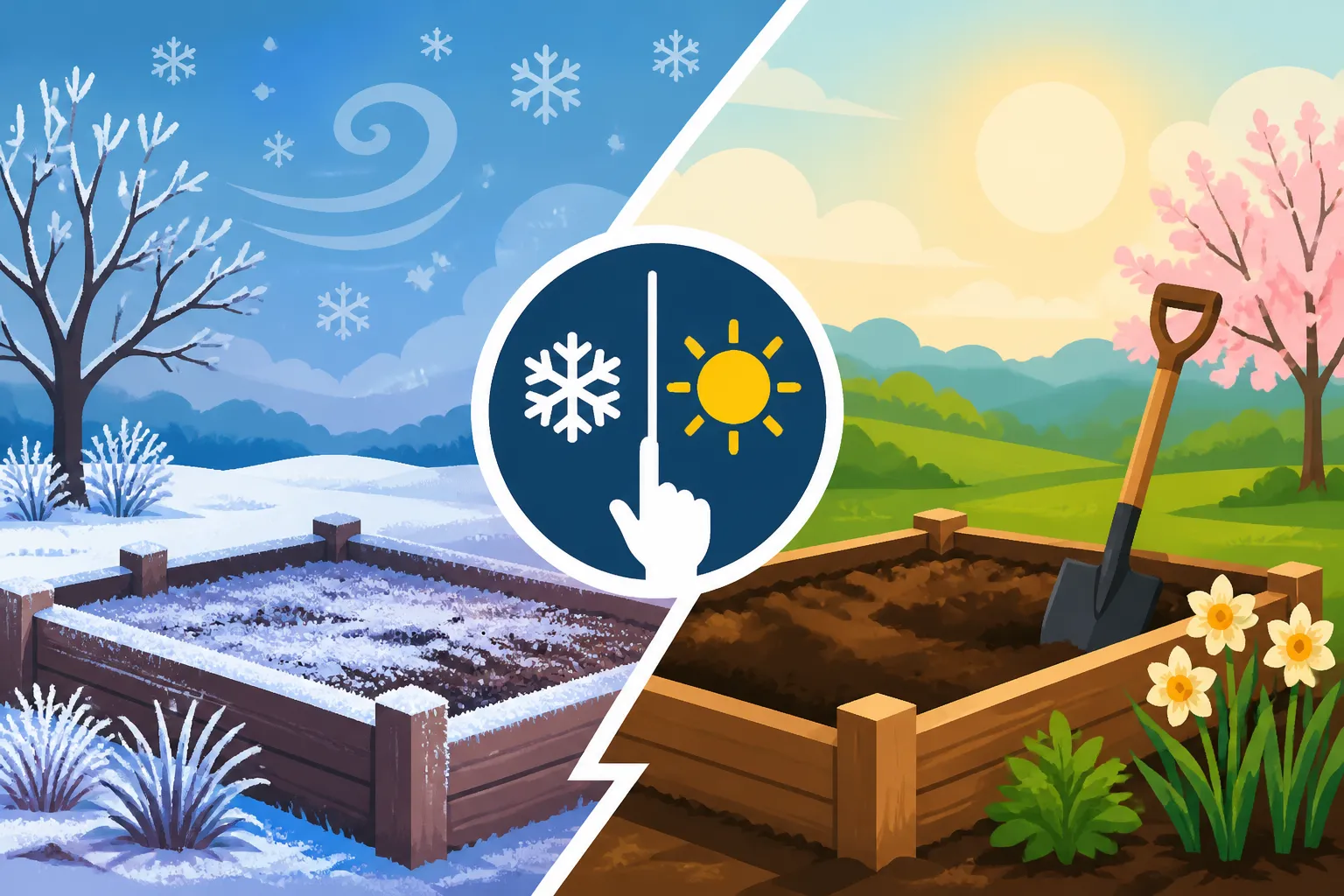
Oklahoma weather can shift quickly in late winter. A mild spell may be followed by a freeze, and conditions can vary across the state and even between a sheltered yard and an exposed garden. Bed preparation can begin before planting, but there’s no need to rush into digging simply because daytime temperatures feel springlike.
Start by checking the soil itself. A bed is ready to work when the soil is moist but not saturated. If it sticks heavily to tools, smears when handled, or forms a dense, sticky clump, wait for it to dry. Working wet soil can compact it and break down its structure, leaving clods that are difficult to prepare for planting. Heavy clay is especially vulnerable to damage when worked too wet.
A simple hand check can help: take a small handful from the bed and gently squeeze it. If it releases water, feels slick, or stays packed into a sticky mass, hold off. If it crumbles when you open your hand rather than smearing, conditions may be suitable for light work. This is a practical check, not a guarantee; soil can be drier near the surface than below.
Raised beds often drain and warm differently from in-ground beds, but they still need a moisture check. A raised bed can be workable sooner after rain, or it can dry out quickly in wind. Check more than the top layer before digging or sowing. Containers and small raised beds may also lose moisture faster than a large garden plot.
Use the same patience when deciding whether to plant. A workable bed is not necessarily warm enough for every crop, and a warm afternoon does not erase the chance of a cold night. Before sowing, check the crop’s requirements and, where useful, measure soil temperature at the planting depth. Testing Soil Temperature Before Sowing Spring Crops in Oklahoma explains why soil temperature can be more informative than a brief warm spell.
Frost dates can help frame the season, but they are probabilities, not appointments. They vary by location and from year to year, and they do not predict the weather on a particular night. Use local forecasts alongside regional guidance rather than treating an average date as a promise. For more context, see Understanding Oklahoma Freeze Dates and Seasonal Sowing Windows and Getting Garden Beds Ready Before Oklahoma’s Final Spring Freeze.
A quick readiness check
Before you dig, rake, or set out plants, consider these questions:
- Is the soil damp but crumbly, rather than wet and sticky?
- Can you work from a path without stepping on the growing area?
- Is the job limited to light preparation, or would it require digging and turning wet soil?
- Is the crop suitable for current soil and weather conditions?
- Is a freeze in the forecast, and would the plants need protection?
If the soil is too wet, use the time to plan beds, check seed packets, clean tools, or start transplants indoors if the crop and your setup suit that approach. Starting Vegetable Transplants in Seed Flats for Oklahoma Gardens covers the indoor-starting option. Waiting for workable soil is useful preparation, not lost time.
Prepare beds without damaging their structure
Late winter is a good time to inspect beds and take care of jobs that do not depend on digging. Clear away diseased or pest-damaged plant debris, remove old supports that need repair, check irrigation parts, and identify places where water pools or runs off. If you use paths, keep foot traffic on them. Avoid walking directly across bed soil, particularly when it is wet.
Remove debris selectively. Healthy plant material that has not developed disease or heavy pest problems may be suitable for composting, depending on the composting method and material. Diseased or infested material should not automatically go into a home compost pile, where conditions may not reliably destroy the problem. When in doubt, separate it and check local disposal guidance.
Weeds are easier to deal with before a new crop fills the bed. Pull or remove small weeds when the ground is workable, taking care not to churn the soil unnecessarily. Perennial weeds may regrow from roots or underground stems, so pulling visible tops may not finish the job. If a weed is unfamiliar, identify it before using a control method; some approaches can damage the crops you intend to grow.
Check existing mulch before removing it. A thick layer can keep soil cool and slow drying, while bare soil may be more exposed to erosion, crusting, and temperature swings. You do not need to strip every bed simply to prepare for spring. Move mulch aside only where you need access to sow or transplant, and keep it away from young plants if it is smothering them. Once crops are established, mulch can help moderate soil moisture and reduce weeds, but it should not be treated as a substitute for checking the bed’s condition.
If you plan to add compost or another soil amendment, first consider what the bed needs. Finished compost can contribute organic matter, but more is not automatically better, and it is not a reliable substitute for a soil test when you need to understand fertility or pH. Avoid adding fertilizer or lime by habit. Why to Test Garden Soil Fertility Before Adding Amendments explains how testing can help prevent unnecessary additions.
For an in-ground bed with compacted or heavy soil, avoid trying to solve the problem by repeatedly tilling it, especially while wet. Repeated disturbance can leave soil structure worse rather than better. A bed that needs substantial improvement may take more than one season of careful management. The practical basics are to stay off wet soil, add suitable organic material based on the bed’s needs, and avoid turning the soil when it is not in a workable condition. For a closer look at local clay challenges, see Starting a Garden in Oklahoma Clay: Site Prep and Organic Matter.
Do the jobs that can wait out a freeze
A freeze does not prevent every kind of garden work. You can sketch bed layouts, check seed supplies, repair trellises, label rows, clean tools, and plan where covers can be secured. These jobs reduce last-minute scrambling when planting conditions improve.
Use a dry, workable day for digging or incorporating material. If the bed is wet, shift to jobs that do not disturb it. If a freeze is approaching, it is usually more useful to protect plants already growing than to set out tender transplants that are not prepared for cold. The right choice depends on the crop, its stage, the forecast, and the protection available.
Decide what to sow and what to hold back
A late-winter bed may be suitable for some cool-season crops before it is suitable for warm-season vegetables. Crop type matters. Greens and roots generally have different cold tolerance and sowing needs from tomatoes, peppers, beans, cucumbers, and other tender warm-season crops. Even among cool-season vegetables, germination and growth depend on conditions in the bed.
Read the seed packet for planting guidance, including soil and spacing information, and consider whether the crop is best direct-sown or transplanted. A packet’s days-to-maturity estimate does not account for every interruption from cold, heat, or uneven weather. It is a planning aid, not a guarantee of a harvest date. Days to Harvest: Estimating Maturity for Garden Crops explains how to use that estimate more realistically.
Cool-season crops can be a sensible choice when conditions suit them, but do not assume that “cool-season” means immune to freezing. Newly emerged seedlings and transplants may be more vulnerable than established plants, and the level of protection needed depends on the crop and the forecast. If you are unsure, delay sowing or be prepared to cover the planting.
Warm-season crops need more than a sunny day. Their seed and young plants need suitable warmth, and a cold spell can stall growth or injure tender growth. Starting seeds indoors can give some crops a head start, but indoor starts still need to be conditioned before they are moved outside. Hardening Off Spring Vegetable Transplants in Oklahoma Backyards describes how to prepare seedlings for outdoor conditions.
The same caution applies to store-bought transplants. A plant that looks vigorous at the garden center may have been sheltered, so it may not be ready for direct exposure to wind, sun, and cold. Plan to harden it off and keep a cover available if cold weather returns. If you are comparing sowing directly with setting out starts, When to Direct Sow vs Transplant Vegetables on the Oklahoma Calendar offers a crop-timing perspective.
Use your yard’s microclimates as supporting information, not as a replacement for the forecast. A south-facing wall or a sheltered corner may warm sooner than an open, low spot, but it can also create misleading daytime warmth. Cold air can collect in low areas, and a bed exposed to wind may cool differently from one close to a building. Oklahoma Microclimates: Where Hot Afternoon Sun Hits Garden Beds can help you think through how exposure affects a growing space.
| Bed or weather condition | What to do | What to avoid |
|---|---|---|
| Soil is wet, slick, or sticky | Wait for it to drain; plan or repair equipment instead | Digging, tilling, or walking across the bed |
| Soil is moist and crumbles when handled | Do light preparation and remove weeds carefully | Turning more soil than the task requires |
| A freeze is forecast and tender plants are in place | Prepare suitable covers and monitor the forecast | Assuming a warm afternoon means the plants are safe |
| Cool-season sowing conditions are suitable | Follow crop-specific seed guidance and watch for cold snaps | Treating all cool-season crops as frostproof |
| Warm-season planting is being considered | Check crop needs, soil warmth, and the forecast | Setting out tender crops based only on daytime warmth |
| Bed fertility or pH is uncertain | Test before adding amendments | Adding fertilizer or lime without a clear reason |
Protect the garden when cold returns
If plants are already in the ground, have a plan before a freeze warning or cold forecast. The most useful protection depends on the crop, plant size, expected conditions, and the material available. A fabric row cover can help protect plants from some cold exposure, and hoops can keep the material from pressing on delicate foliage. A cover that reaches the ground can help retain warmth around the plants, but it cannot make every crop safe in every freeze.
Secure covers so wind cannot lift or shift them. Check that the material does not crush the plants, and remove or open it when conditions allow, since covered plants still need light and can overheat on a warm day. Do not assume that a lightweight cover will protect against every cold event. For tender transplants, postponing planting may be safer than relying on protection.
If plants are not yet in the bed, a cover can still be useful for an early sowing when conditions suit the crop. It is not a substitute for proper timing or healthy soil. Keep track of which beds are covered and check the forecast again; conditions can change after the cover is put in place.
A frost and a hard freeze are not interchangeable in their effects. A light frost may damage exposed tender growth without freezing the soil, while a more severe or prolonged freeze can cause more extensive injury. The forecast may not capture every detail of a specific bed, particularly where elevation, wind, and shelter differ. Look at the expected overnight conditions and the vulnerability of the plants rather than relying on a single label.
If you need to prioritize, protect the most vulnerable plants first. Newly planted transplants and tender crops often deserve more attention than established, cold-tolerant plants. Prioritizing Garden Covers: Do You Need to Protect Every Bed? can help organize that decision, while Protecting Young Oklahoma Garden Plants From Spring Cold covers practical options for young crops.
Avoid making a last-minute planting decision based on a single warm day. If you already set out plants and a cold night is coming, protect them promptly and follow crop-specific guidance. If no suitable cover is available, do not assume that improvised materials will provide reliable protection; a protective cover needs to be suitable for the conditions and secured safely.
Use a flexible late-winter bed-prep sequence
A sequence helps keep bed work manageable without tying it to a fixed date. Move through the steps as weather and soil conditions allow; some beds may be ready before others.
- Walk the garden and make a plan. Note drainage problems, shade, wind exposure, paths, and where crops will go. Rotate crop families where practical rather than planting the same kind of crop in the same bed repeatedly.
- Check the soil before entering the bed. If it is saturated or smears when handled, stay off it. Wait for it to become workable before digging or raking.
- Clear only what needs to be cleared. Remove debris that could interfere with planting, and separate material that may carry disease or pests. Keep useful mulch where it is not blocking the work.
- Test or assess before amending. If fertility or pH is uncertain, use a soil test to guide decisions. Do not treat every bed as if it needs the same amendment.
- Prepare the surface lightly. Once soil is workable, remove weeds and make only the adjustments needed for the planned crop. Avoid unnecessary tilling or deep disturbance.
- Match the crop to conditions. Choose crops based on their cold tolerance and planting requirements. Wait on tender crops until the soil and forecast are appropriate.
- Set up protection before planting vulnerable starts. Check covers, hoops, and fasteners ahead of time instead of searching for them when a cold night is already approaching.
- Recheck the forecast after planting. Keep an eye on changing conditions and be ready to protect young plants or delay the next sowing.
A flexible sequence is more reliable than a calendar date because Oklahoma gardens do not all share the same conditions. A windy, exposed bed may stay colder or dry more slowly than a sheltered bed nearby. Soil type, drainage, elevation, and the timing of rain all affect when work is practical. When one bed is ready and another is not, treat them separately rather than forcing the whole garden onto one schedule.
Finally, leave room for adjustment. A planned sowing can be delayed by wet soil, a cold spell, or a forecast that changes. Keep a brief record of what you planted and how the bed performed. Over time, those notes can show which areas dry quickly, which stay cold, and where protection is most useful.
Frequently Asked Questions
Can I prepare garden beds before the last spring freeze?
Yes. Planning, repairing supports, clearing problem debris, and checking soil can happen before the freeze risk has passed. Digging and other soil work should wait until the bed is dry enough to handle. Planting depends on the crop’s cold tolerance, soil conditions, and forecast.
Should I till an Oklahoma garden bed in late winter?
Not if the soil is wet or sticky. Tilling wet soil can compact and damage its structure. If soil is workable, disturb it only as much as needed for the planting plan; repeated or unnecessary tilling is not a substitute for improving soil over time.
Is a warm day enough to plant tomatoes or other warm-season crops?
No. A warm afternoon does not show that soil and overnight conditions are suitable. Check crop-specific planting needs, soil warmth, and the forecast, and be ready to protect transplants if cold returns.
Do frost dates tell me the exact day it is safe to plant?
No. Frost dates are probabilities that vary by location and year. They are useful for planning, but they do not predict a particular night. Combine regional timing guidance with current forecasts and the conditions in your own garden.
Disclaimer
This article is for general informational purposes only and does not constitute professional advice. Laws, prices and regulations vary by location and change over time. Consult a qualified professional for guidance on your specific situation. Oklahoma Gardening Guide is not a government agency and is not affiliated with any university extension, state department of agriculture or other government agency.