When to Plant Tomatoes in Oklahoma for Spring Harvest
Tomato timing in Oklahoma is tricky because a warm afternoon can be followed by a cold night, and the safe planting window differs across the state. Set plants out too early and they may stall or suffer cold damage; wait too long and summer heat can interfere with fruit set. The best approach combines local frost guidance with soil and nighttime temperatures.
The best time to plant tomatoes in Oklahoma
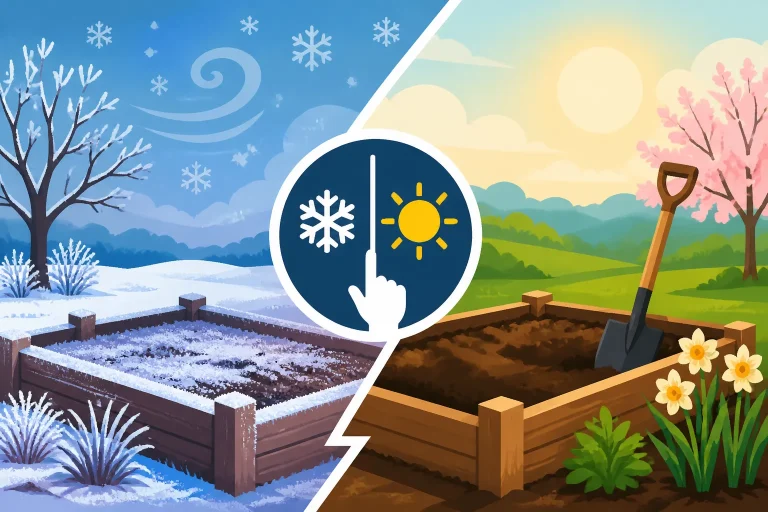
For a spring harvest, plant tomato transplants outdoors only after the chance of a damaging spring frost has passed and the soil has warmed. A useful target is soil that stays around 60°F or warmer, with nighttime temperatures generally holding above 50°F. These are planning cues, not guarantees: a forecast can change, and cold pockets in a yard may stay chilly after nearby areas warm up.
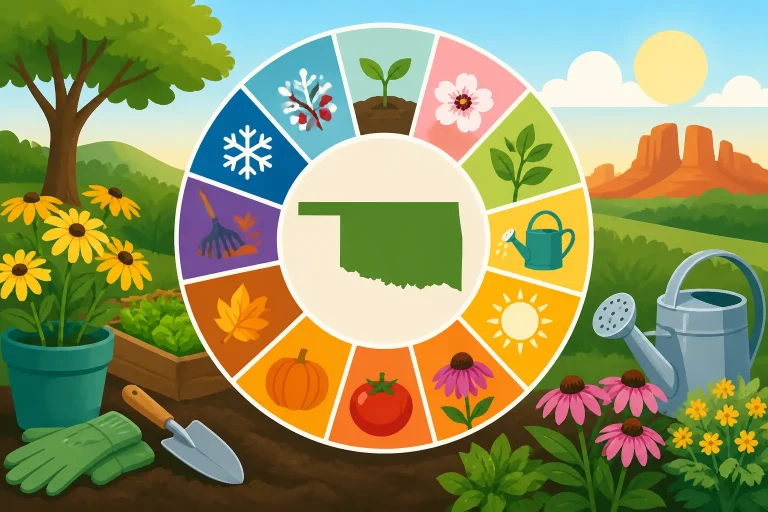
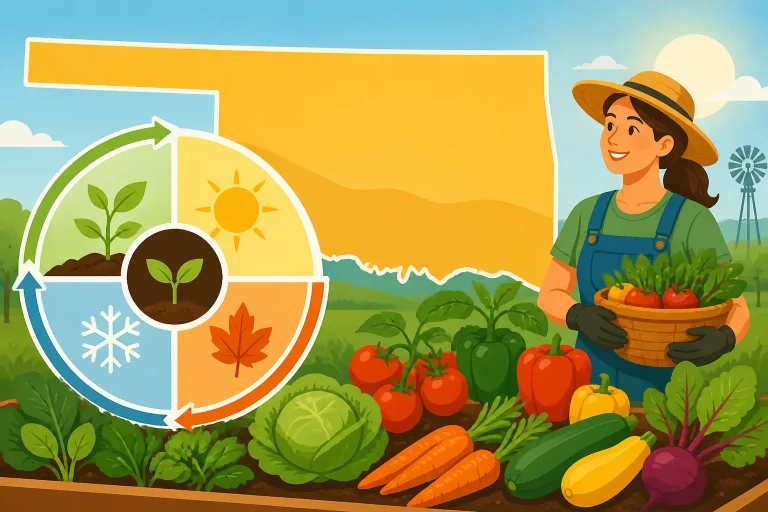
The calendar window depends on where you garden. Southern and eastern parts of Oklahoma may reach suitable conditions before northern and western areas, but a warm spell alone is not enough to confirm that the garden is ready. The dates also shift from year to year. Use Safe Vegetable Planting Dates Across Oklahoma Regions to understand regional differences, and treat any average last-frost date as a probability rather than a fixed deadline. Average Last Spring Freeze Dates Across Oklahoma Regions explains how those averages can inform planning without promising frost-free weather on a particular day.
A practical way to decide is to look for several signs together:
- Your local frost guidance indicates the usual spring frost window is behind you.
- The soil in the planting bed is warming rather than staying cold and wet.
- Nighttime forecasts are consistently mild, not just warm during the day.
- The extended forecast does not show a sharp cold snap that would put young plants at risk.
If these conditions are not lined up, waiting is usually less costly than planting early. A tomato that goes into warm soil later can establish faster than one left shivering in cold ground. The date alone matters less than the conditions around the plant.
| What you observe | What it suggests | Practical response |
|---|---|---|
| Warm afternoons but chilly nights | The weather may not be settled enough | Keep transplants protected and wait for milder nights |
| Cold, damp garden soil | Roots may establish slowly | Delay planting and check soil temperature again |
| Mild nights and warming soil | Conditions may be approaching the planting window | Check the forecast and prepare the bed |
| A frost warning after planting | Tender plants may be damaged | Cover plants before evening and uncover them when conditions allow |
| High heat arrives soon after planting | New plants may be stressed | Plant in a cooler part of the day and keep soil evenly moist |
For broader context on how to interpret spring timing, see Understanding Oklahoma Freeze Dates and Seasonal Sowing Windows. The important point is not to wait for a date that guarantees safety—no average date can do that—but to combine regional guidance with the weather and soil in your own garden.
Check soil and weather before transplanting
Tomatoes are warm-season plants. They need warmth to establish and grow steadily, so the first sunny afternoon in spring is not a reliable signal that planting time has arrived. Cold roots can slow growth, while chilly nights can stress plants that looked healthy in their pots.
Measure the bed, not just the air
A soil thermometer gives a more useful reading than a glance at the forecast. Take the temperature in the part of the bed where roots will grow, and check more than once rather than relying on a single warm reading. A bed that faces south or sits beside a heat-reflecting wall may warm before a shaded or exposed bed, but it can also lose warmth quickly overnight. Testing Soil Temperature Before Sowing Spring Crops in Oklahoma covers the basics of checking soil temperatures.
Soil moisture matters too. A wet, cold bed warms slowly and is harder to work without compacting it. If the soil clings to tools or smears when handled, let it dry enough to crumble before digging or transplanting. Avoid working saturated soil simply to meet a calendar target; compaction can make it harder for roots and water to move through the bed.
Watch nighttime forecasts
Daytime highs can be misleading. Tomatoes may tolerate a pleasant afternoon yet remain stressed by repeated cool nights. Look at the overnight forecast for several days, and pay attention to warnings for frost or a sudden temperature drop. If the forecast is uncertain, postponing transplanting is a reasonable choice.
A forecast cannot account for every garden microclimate. Low spots, open areas exposed to wind, and beds beside cold surfaces may behave differently from sheltered locations. If you have noticed that one part of the yard stays colder, use that experience when choosing where and when to plant. Oklahoma Microclimates: Where Hot Afternoon Sun Hits Garden Beds discusses how yard conditions create local differences.
Make room for weather swings
Oklahoma spring weather can change quickly. A stretch of warm weather does not rule out another cold night, so it helps to have a plan before planting. Keep row cover or another suitable cover ready if a late cold snap is possible. Covers can reduce exposure, but they are not a substitute for choosing an appropriate planting window, especially when a hard freeze is forecast.
When a cold night threatens, cover plants before temperatures fall and secure the material so wind cannot lift it. Avoid letting plastic rest directly on tender foliage, and remove or vent covers as temperatures rise the next day. For more on options, see Protecting Young Oklahoma Garden Plants From Spring Cold. If conditions are expected to be severe, follow current local weather guidance rather than assuming a cover will make any planting date safe.
Start seeds early enough to produce sturdy transplants
Gardeners who start tomatoes from seed need to count backward from the time plants are likely to be safe outdoors. Starting too early can leave you with tall, crowded seedlings that outgrow their containers while the garden is still cold. Starting too late can delay the first harvest.
Use the seed packet’s maturity information as a planning estimate, then allow for the fact that indoor conditions, transplant recovery, and outdoor weather affect the schedule. The term “days to maturity” may be counted differently by different suppliers, so check the packet’s explanation. Days to Harvest: Estimating Maturity for Garden Crops can help you use maturity information when planning for a harvest.
A common approach is to start tomato seeds indoors several weeks before the expected transplant window, often around six to eight weeks beforehand. That is a planning range, not a requirement; the appropriate lead time depends on the variety, your indoor light, and how quickly plants grow. For details on timing other crops and starts, see Starting vs Transplanting Vegetables on the Oklahoma Calendar.
Keep seedlings under strong light so they grow stocky rather than stretched. If you use a sunny window, rotate the containers so plants do not lean heavily toward the light. Water when the growing medium begins to dry, but do not leave containers sitting in water. Seedlings need consistent care, not waterlogged roots.
Harden seedlings off gradually
Indoor-grown plants need time to adjust to direct sun, wind, and outdoor temperature swings. Set them outside in a sheltered spot for a short period at first, then gradually increase their exposure over several days. Bring them in or protect them if the weather turns cold, windy, or unusually hot during this transition.
Do not skip this step because the planting day looks calm. A seedling moved straight from a warm room to full outdoor sun can wilt or develop leaf damage. Hardening Off Spring Starts: Conditioning Seedlings in Oklahoma provides a fuller process for making that transition.
If buying transplants, choose plants that look sturdy, with healthy leaves and no obvious signs of damage. A very large plant is not necessarily a better choice than a compact one. Check that the container drains and that roots are not so crowded that they form a dense mass. If you are unsure whether to buy plants or start from seed, compare the effort and timing in the same planting-calendar article.
Transplant tomatoes carefully and help them settle in
Once the weather and bed are ready, transplant on a mild day if possible. Avoid the hottest, windiest part of the day, which can add stress as roots adjust. Water the plant before removing it from its container so the root ball holds together.
Prepare the planting spot before taking plants out of their pots. A hole should be large enough for the root ball, and the soil should be workable rather than soaked. If the transplant is tall and leggy, it can generally be planted deeper than it grew in the pot, as tomato stems can form additional roots along buried portions. Remove leaves that would sit below the soil surface, but keep healthy foliage above ground.
After planting, firm the soil gently around the root ball and water thoroughly to settle soil around the roots. Do not pack the ground hard; roots need air as well as moisture. If you use a support such as a stake or cage, putting it in while the plant is small can reduce the risk of damaging established roots later.
Space plants according to the variety and support system, leaving room for air to move between them. Crowded foliage stays damp longer after rain or watering and can make inspection and harvesting difficult. Follow the seed packet or plant tag for spacing, since compact and sprawling types do not have identical needs.
Keep moisture steady, not excessive
A newly transplanted tomato needs enough water to establish roots, but frequent shallow watering can keep roots near the surface. Aim to keep the root zone from drying out completely while avoiding persistently saturated soil. Check the soil near the plant rather than relying only on the surface, which can dry quickly in sun and wind.
Mulch can help moderate soil moisture and temperature once the soil has warmed. Keep it from pressing against the stem, and avoid using a heavy layer when the bed is still cold. Water at the base of plants when practical, rather than routinely wetting foliage late in the day.
Support growth without forcing it
Tomatoes need a suitable growing site, adequate moisture, and balanced care to develop well. A sunny location is generally important for fruit production, but plants can still struggle if they are exposed to relentless heat and dry soil. If spring turns hot soon after transplanting, pay attention to soil moisture and watch for wilting during the hottest part of the day.
Do not respond to every pale leaf or slow-growing plant with fertilizer. Overfeeding, especially with a product high in nitrogen, may encourage leafy growth at the expense of fruiting. If you are considering a soil amendment or fertilizer, base the decision on the product instructions and, where appropriate, a soil test. For general garden planning beyond timing, see Planning an Oklahoma Vegetable Garden: Beds, Soils, and Seasons.
Plan for spring harvests and common timing setbacks
Planting early does not always lead to an earlier harvest. A transplant put into cold soil may pause while roots recover, so it can lose time that a later, healthier plant would not. Likewise, a seedling stressed by wind, strong sun, or a cold snap may take longer to resume growth. A sound transplanting window is a better starting point than trying to beat the calendar.
Tomato maturity estimates can help you compare varieties, but they are not exact harvest promises. Temperature, sunlight, water, plant health, and the way maturity is counted all affect the result. Use the packet information to compare options, then allow for Oklahoma’s variable spring conditions. A plant that establishes well may produce more reliably than one planted early and repeatedly stressed.
If plants are already outside before a cold snap
Check the forecast and act before temperatures fall. Cover plants with a breathable material or another suitable plant cover, securing it so it does not blow away. Make sure the cover reaches the ground where possible, and remove it or open it once the day warms. If a freeze is forecast, understand that temporary cover may not fully protect tender tomato plants.
After the cold passes, do not prune or remove a plant immediately just because some leaves look damaged. Wait until the plant has had a chance to recover, then assess whether stems and growing points remain alive. Water normally if the soil is dry, but do not overwater a stressed plant.
If the weather warms quickly
A late planting can still grow, but high temperatures may make establishment more difficult and can interfere with flower and fruit development. Water consistently, use mulch after the soil is warm, and avoid transplanting during the hottest part of the day. If choosing among varieties, check maturity information and select one suited to the time remaining in your growing season. The guidance in Best Temperature Windows for Setting Out Warm-Season Oklahoma Crops can help you judge whether conditions are suitable beyond tomatoes alone.
If a plant stalls after transplanting
A short pause is common while a transplant adjusts, but prolonged slow growth can point to cold soil, root disturbance, poor drainage, or inconsistent moisture. Check conditions before adding fertilizer. If the soil is still cool, warmth and time may be the main needs. If it is soggy, improve drainage or adjust watering. If the root ball was badly disturbed, keep moisture steady while the plant re-establishes.
A simple planting record can make next spring’s decisions easier. Note the transplant date, soil temperature if measured, forecast conditions, and how plants performed in different parts of the yard. Over time, these observations help distinguish a general regional planting window from the conditions of your own garden.
Frequently Asked Questions
Can I plant tomatoes in Oklahoma as soon as the last frost date passes?
Not automatically. Average last-frost dates describe probabilities, not a guarantee that frost is over. Check local guidance, soil warmth, nighttime forecasts, and the possibility of another cold snap before transplanting.
How warm should the soil be for tomato transplants?
A useful target is soil around 60°F or warmer, with mild nights generally above 50°F. Check the bed itself rather than relying only on daytime air temperatures.
Is it safer to wait if the forecast is uncertain?
Yes. Waiting for warmer soil and more settled nights is often safer than planting into a cold spell. A transplant that establishes in suitable conditions may catch up with or outperform one planted early and stressed.
Can I grow tomatoes from seed in Oklahoma?
Yes. Start seeds indoors far enough ahead of the outdoor planting window to produce sturdy plants, then harden them off gradually. Avoid starting so early that seedlings become crowded or stretched before the garden is ready.
Disclaimer
This article is for general informational purposes only and does not constitute professional advice. Laws, prices and regulations vary by location and change over time. Consult a qualified professional for guidance on your specific situation. Oklahoma Gardening Guide is not a government agency and is not affiliated with any university extension, state department of agriculture or other government agency.